
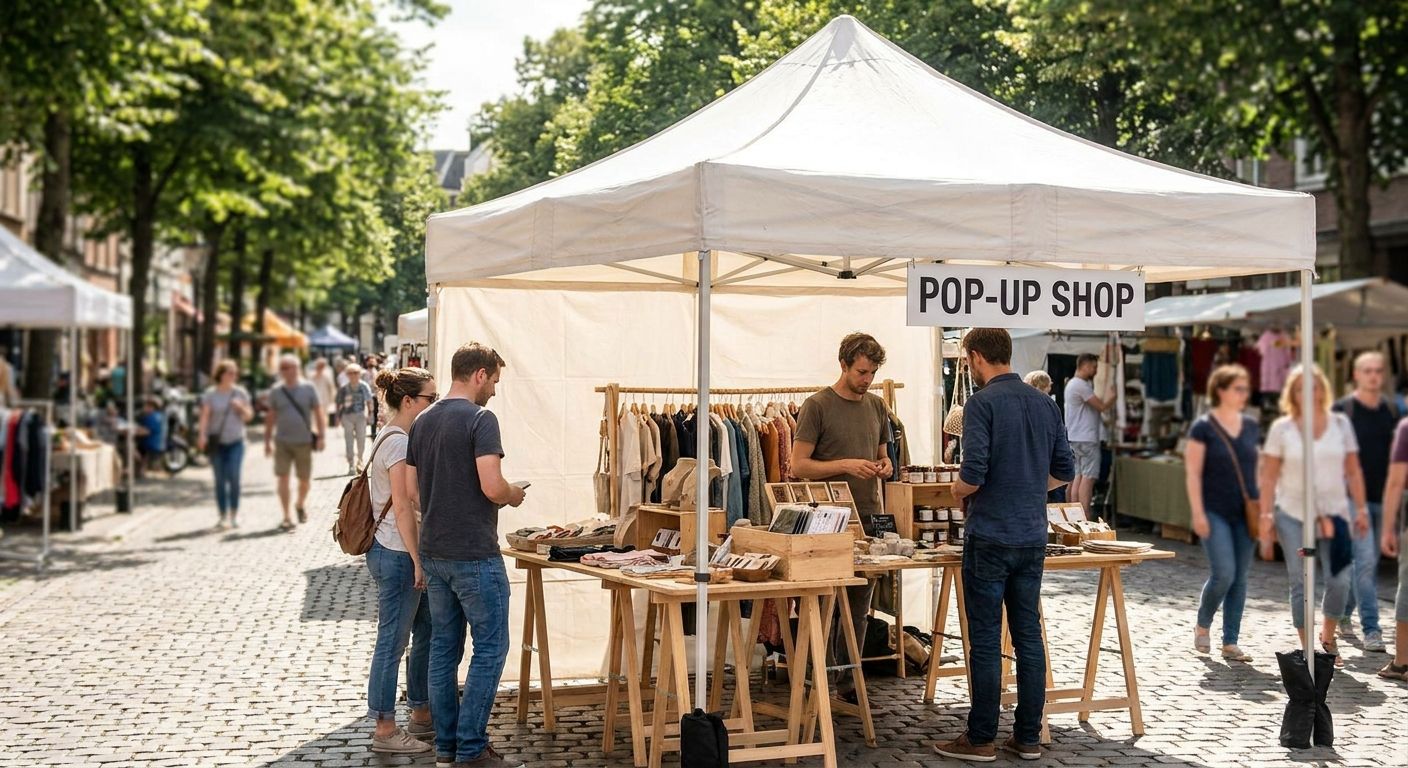
A pop-up gazebo for retail shops has to survive daily setup, all-day trading, and unpredictable British weather without turning into a second job. This guide breaks down what actually matters for market traders and pop-up retailers buying in 2026, not what looks good in a product photo.
- A 3x3m steel-frame pop-up gazebo for retail shops suits solo traders working markets 2-3 days a week: Buy.
- 3x6m aluminium layouts fit multi-stall pop-up retail setups needing counter and storage space: Consider.
- Skip PVC-only canopies without taped seams for year-round UK trading; leaks cost more than the gazebo did.
- Branded canopies pay back fastest for traders doing 20+ market dates a year: Buy if you trade that often.
Why this matters
A gazebo that works for a weekend festival stall is not the same gazebo that survives 40 market days a year in Scottish weather. Retail traders put more strain on a shelter than almost any other buyer group: daily pack-down, repeated frame stress, stock weight on the counter, and customers pulling at the sides all day.
Get the wrong frame or fabric in 2026 and you're either replacing the gazebo by autumn or losing trading days to a canopy that won't dry out. The right one pays for itself in fewer wasted mornings.
Who this is for
This guide is written for market traders, pop-up shop owners, and seasonal retailers who set up and tear down a stall on a regular schedule — weekly farmers markets, monthly craft fairs, seasonal festival circuits, or a rotating pitch at multiple sites. If you're buying one gazebo for a single wedding or a garden party, most of this still applies, but the frame and fabric decisions below are calibrated for people who do this weekly, not once.
What to look for in a pop-up gazebo for retail shops
Frame material and weight rating
Steel frames take repeated setup and pack-down better than fibreglass, and fibreglass legs are the single most common failure point reported by market traders after a season of daily use. Aluminium sits in between — lighter to carry, but you trade some rigidity for that weight saving. For anyone trading more than twice a week, frame durability matters more than the price tag on day one.
Waterproofing and seam sealing
A canopy rated waterproof on the label and a canopy that's actually taped at every seam are two different products. Pop-up retail stock — clothing, prints, food packaging — doesn't tolerate a slow drip the way a marquee at a wedding might. Check for taped seams, not just a waterproof fabric claim.
Setup time and crew size
If you're setting up solo before opening at 7am, a gazebo that needs two people and a toolkit isn't a retail gazebo, it's a liability. Look for pop-up frames designed for one person to raise without tools — that's the entire point of the category.
Size versus stock display
A 3x3m footprint (9m²) works for a single trestle table and rail. Anyone running a counter, a till point, and a rail or shelving needs 3x4.5m minimum, and multi-day market stalls with backstock often need 3x6m. Undersizing is the most common mistake first-time traders make.
Branding options
A plain white canopy blends into every other stall on the row. A printed valance or roof panel with your logo turns your gazebo into signage that works even when you're not standing next to it. For traders doing 20 or more dates a year, this is close to a marketing line item, not an accessory.
Wind stability and anchoring
A gazebo that isn't pegged, weighted, or roped properly will move in an open market square long before it moves in your back garden. Retail stalls sit exposed on hardstanding more often than grass, so weight bags matter as much as stakes.
Top picks for pop-up retail trading
The safe pick — 3x3m steel-frame gazebo. A 9m² footprint suits a solo trader with one table and a rail, and steel legs hold up to daily raise-and-fold better than fibreglass over a full trading season. Tapass Instant Shelters builds its range around this kind of daily-use frame rather than the occasional-use gazebos sold for garden parties. Verdict: Buy if you trade one to three days a week from a single table.
The lightweight option — 3x4.5m aluminium-frame gazebo. Aluminium shaves noticeable weight off the carry bag, which matters if you're loading a hatchback rather than a van. You lose a little rigidity in exchange for that portability. Verdict: Consider for traders who travel between multiple market sites and pack the vehicle themselves.
The wildcard — 3x6m extended layout. Doubling the depth of a standard 3x3m unit gives room for a counter, a till point, and backstock behind it, but it needs two people to raise safely and takes up a full double pitch at most markets. Verdict: Consider only if your pitch fee and stock volume justify the extra footprint.
The marketing multiplier — branded canopy add-on. A printed roof or valance panel does the advertising while your hands are busy serving customers, and it's the difference between looking like a stall and looking like a business on a market row. Verdict: Buy if you trade 20+ dates a year and haven't branded yet.
The event extra — flags and inflatables. Feather flags and inflatable arches pull footfall at large one-off events like festivals or launch days, but they add setup time and storage bulk that daily market traders rarely need. Verdict: Skip for weekly market trading, Consider for occasional big-footfall events.
What to avoid
- Budget PVC canopies without taped seams — the fabric label says waterproof, but stitched-only seams leak the first time it rains sideways, which is most Scottish market days.
- Gazebos that need a toolkit to erect — if the product listing mentions bolts or a spanner, it's built for occasional use, not daily retail trading.
- Undersized 3x3m pitches for multi-product retail — fine for one table, cramped fast once you add a till, a rail, and backstock boxes.
Get advice before you buy
Talk to a real person about frame size, branding and trading frequency.
Verdict comparison
| Pick | Footprint | Setup crew | Best for | Verdict |
|---|---|---|---|---|
| 3x3m steel-frame | 9m² | 1 person | Solo trader, 1-3 days/week | Buy |
| 3x4.5m aluminium-frame | 13.5m² | 1-2 people | Multi-site traders who travel | Consider |
| 3x6m extended | 18m² | 2 people | Counter + backstock, multi-day markets | Consider |
| Branded canopy add-on | N/A | Same as base frame | 20+ dates a year | Buy |
| Flags and inflatables | N/A | 1-2 people | Large one-off events | Skip for weekly trading |
FAQ
What size pop-up gazebo is best for a retail stall?
A 3x3m gazebo covers roughly 9m² and suits a single table and rail. Retailers running a counter, till, and backstock usually need 3x4.5m or 3x6m to avoid a cramped setup.
Is a pop-up gazebo waterproof enough for all-day retail trading?
It depends on seam construction, not just the fabric label. Look for taped seams rather than stitched-only joins, since stitching alone lets water through during heavy or sideways rain.
Can I get my logo printed on a pop-up gazebo?
Yes, custom branded canopies and printed valance panels are widely available and turn a plain shelter into signage. This matters most for traders working 20 or more market dates a year, where brand visibility compounds.
How much wind can a pop-up gazebo handle?
Wind stability depends more on anchoring than the frame alone. Weight bags and ground stakes matter more on hardstanding market pitches than on grass, since there's nothing to peg into on tarmac.
Do pop-up gazebos need tools to set up?
A genuine pop-up frame needs no tools and no second person for a 3x3m unit. If a listing mentions bolts, spanners, or a two-person minimum, it's built for occasional use rather than daily retail trading.
What's the difference between steel and aluminium frame gazebos?
Steel frames hold up better to repeated daily setup and pack-down, while aluminium is lighter to carry but slightly less rigid. Traders who load their own vehicle often prefer aluminium; traders who trade five-plus days a week often prefer steel.
How long does a pop-up gazebo last for regular market trading?
Lifespan comes down to frame material and how it's stored between uses, not the calendar. A steel-framed gazebo stored dry and folded correctly outlasts a fibreglass one used at the same frequency by a wide margin.
Are branded gazebos worth it for occasional pop-up traders?
Branding pays back fastest for traders doing 20 or more dates a year. For a single one-off event, a plain gazebo with a banner or flag does the same job for less outlay.
One last thing
The part of a pop-up gazebo that fails first at a market isn't usually the frame — it's the guy ropes and pegs nobody replaced after the first storm bent them. Check anchoring hardware at the start of every season in 2026, not just the canopy and frame, and you'll get more trading days out of the same shelter than most traders on your row.